Leadership Philosophy
Mindset,
Process,
Acumen.

My framework for building high-performing product teams that sustain excellence through transparency, structured accountability, growth mindset, and data-informed delivery - providing oversight without micromanagement.
The Framework
Three Pillars. Focused Teams.
Teams are built on shared language and accountability. We focus on these three foundational elements to sharpen our work and determine where we need to grow our capabilities and share that growth with others.
01
Mindset
The key to good product management. I always look at how we express our values, our goals, and our approach to accomplishing hard things. If you have the right mindset to identify problems, communicate with excellence, and collaborate with others you will naturally become a leader of your product. The right mindset is the foundation for PM skills and knowledge. It’s the hardest thing to teach.
02
Process
This is the operating system of how we provide value to the team. How we work together with cross-functional teams: discovery, roadmap development and review, stakeholder communication, sprint ceremonies, and retrospectives. Process makes a team’s performance predictable and scalable. We document and standardize what we do so we can continuously improve our approach. Good process drives great product thinking which drives fantastic outcomes.
03
Acumen
This is our expertise in both our business and our technology. Product sits at the intersection of all of the other functions of a business and must expertly navigate across domains. You don’t have to own the business or own the tech stack, but you must understand and accurately represent its needs. Acumen grows with experience but exponentially grows when a team is intentional about it. Silos don’t work, and knowledge must be shared. A team is so much stronger when collective knowledge is democratized and compounded with frequent training and communication. To drive this, I have each member of the team develop and conduct trainings to share their own knowledge with other members of the team - where each training topic is identified as a growth multiplier for mindset, process, or acumen.
Must Haves
Product Tenets. Memorize these.
I repeat these tenets a lot. These are the three principles that everyone must follow without fail. We all hold ourselves to these tenets and evangelize them to others. Simple to understand, but strong enough to drive decisions when the stakes are high.
01
02
03
Work on the biggest, most impactful thing
Every conversation, every sprint planning, every day: are we working on the thing that moves the needle most? If the answer is no, we need to know why and work to fix it. Our value is in providing value. Our ownership of our product is key to the team, the business, and the company as a whole meeting its objectives. We can’t compromise for the sake of an easier time (or for the HiPPO in the room). Shipping code is not an outcome. Finishing a task is not an outcome. How do we ensure we’re working on the biggest, most impactful thing? Follow the second tenet…
Assign a value to your work
Before we build it, we align on what success looks like and what it’s worth. It doesn’t matter the KPI: some features drive revenue, some reduce costs, or perhaps drive retention or engagement. Whatever the currency, we have to know before we do it. If you can’t assign a value to the work, you can’t prioritize it. If you can’t prioritize it, you can’t build it. This is fundamental to eliminate distractions and ensure alignment. But how can we make sure that value is realized? Follow the third tenet…
Measure the Success of What You’ve Done
We always close the loop, no matter what. If we launch something, we have to express that it either met expectations or missed - and then we bring that back to prioritization for iterative product growth. It doesn’t matter if it’s hard to measure, or if it didn’t work, we always seek to understand why. Every team misses the mark sometimes. What matters is that we care and we learn and we apply that learning continuously. The team that measures will learn so much faster than one who ships and forgets. If you’ve ever wondered why your roadmap gives you whiplash from constant changes, try these three tenets out and see how it changes your product for the better.
The first 1:1 framework
Getting Started
Five simple questions I ask every member of the team, especially new hires or inherited members. It’s not a performance review or a gotcha, I use this to build a foundation for coaching and mentoring. As a leader, you have to be comfortable asking questions and listening to the answers. Then apply them and watch your team thrive.
Question 01
What do you want from your manager?
Question 03
What drains you?
Question 02
What gives you energy at work?
Question 04
How do you like feedback and recognition?
Question 05
Where do you want to be in 1, 5, 10 years?
Why this matters
Most managers skip this conversation or rely on building rapport over time. The risk is a manager who doesn’t fully understand their team. The first 1:1 usually takes 15 to 30 minutes, but the information it surfaces can inform your interactions and decisions. It shapes every coaching conversation, every performance discussion, and career development becomes tailored to the person behind the position. This short conversation provides invaluable ROI and signals that I’m a manager who is invested in who they are - not just the work they do.
Operating Rhythm
Team cadence
Predictable rhythms create space for great product work. This is the way the team functions and explains when we connect, how and when we communicate, and how we hold ourselves accountable.
First 1:1
Baseline interview with every new team member and every PM I inherit. Foundational questions to establish the relationship and provide valuable coaching insight and open discussion. Signals from day 1 that the PM owns their career, and I am there to help them succeed.
Manager-led, open ended questions.
Onboarding
PM-led 1:1
Weekly
Each PM owns their 1:1. They send the invite to the manager, not the other way around. It’s their time and their agenda. My role is to show up prepared to listen, coach, and unblock. A PM who doesn’t own their 1:1s is abdicating responsibility for their needs instead of owning them. I will talk to you and guide you, direct you, and support you. This is a consistent discipline from the very first week.
Employee-owned. Manager’s role: coaching, discussing, feedback, development, and sometimes just talking about weekend plans.
Product Status update
Weekly
PMs publish a written product update weekly. Slack (or your communication tool of choice) is preferred, with a dedicated product channel for stakeholders, leadership, and cross-functional team members to read what has shipped, what’s in flight, what’s blocked, and what key decisions are pending. The intent is open and honest transparency, and to maintain a consistent record of product updates and outcomes.
PM-owned. Weekly on Tuesdays by EOD. Distributed to team and stakeholders.
product prioritization meeting
PM-owned meeting with engineering, design, and business stakeholders. This should show the roadmap and introduce discussion on priority outcomes, tradeoffs, and align everyone on the next period of work. Stakeholders can see the product backlog, PMs can discuss their priorities with data, and cross-functional groups (BI, data eng, marketing, etc) can know what’s upcoming and when to expect it. Discussion oriented, not a presentation.
PM-owned. Engineering, UX, and other stakeholders present.
Bi-Weekly / Monthly
product demo
Engineering shows what was built and Product shows why it matters and how we’re measuring it. Engineering owns the “how” and “what” while Product owns the “why” and “outcomes.” This is one of my favorite meetings because stakeholders can see iterative progress over time, challenge assumptions, and feed more information into the product discovery cycle. Builds trust and encourages transparency.
PM + Engineering co-ownership. Stakeholders and internal users must attend.
Bi-Weekly / Monthly
Weather report + competency review
Twice a year, every member of the team completes a Weather Report. This is a team health check that I created to evaluate the subjective feelings across six dimensions. The team member also conducts a self-assessment based on the competency framework for their role. I complete the same assessment and then we have an open discussion about the results. There is no surprise at the EOY review, and I pride myself in ensuring that people know exactly what to focus on and how we can work together to develop those gaps. We set development goals together. This cadence catches 95% of performance issues before they become a problem, and reinforces our ability to execute on the product tenets.
PM self-assessment + manager assessment. Completed independently, discussed together.
Bi-Annual
roadmap retrospective
Quarterly
Honest, public accounting of the last quarter. PMs review the following:
what did we plan?
what did we ship?
what didn’t we do and why?
what did we do that was unplanned and why?
what were the outcomes?
what’s up next? (show the next quarter roadmap)
PM-owned. Full stakeholder and leadership audience. Data-driven.
annual roadmap review
Annual
This is the big 6-12 month view of what the product will focus on in support of company objectives. We present this as a team as a result of “big room” planning that occurs over 3-5 months. We show what’s coming, why it matters, what are the OKRs and how do those connect to company strategy. This is a presentation that should set expectations and build confidence in the product org’s direction. We showcase our accountability for our vision and how will we get there.
PM-led. Executive and/or companywide audience. Follows annual planning cycle.
annual performance review
Annual
This is the formal review for employees, following the company cadence. If I’ve done my job, this will be an easy discussion. I’ve captured their work and have the artifacts to prove it. We’ve discussed development from day 1 and reinforced that weekly throughout the year. And we’ve formally reviewed performance and determined our mutual plan for growth over time. Let’s solidify and formalize the things we do together already.
Manager-led, informed by the entire leadership and product management cycle.
The weather report
Team Health Tool
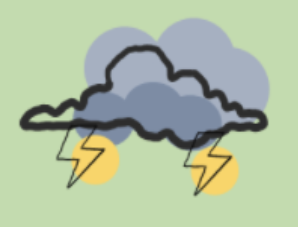
This is a visual check-in that creates a subjective view of how each individual is doing. I usually describe it like this: if you ran into an old friend you hadn’t seen in a while and they said “how’s work?”, this Weather Report reflects whatever you would answer naturally in that moment. No right or wrong answers. No explanation needed. Simply choose one of the answers below.



How are you feeling?
Overall emotional state. This answer should come quick without too much reflection. Think about your energy, engagement, and overall well-being.
How are you growing/learning?
People have to feel engaged and like they’re learning in order to feel good at work. Stagnation is tough and leads to job dissatisfaction. Stay on top of this.
How is your work/life balance?
Sometimes work is hard and you have to work extra hours. Poor work/life balance leads to burnout but is different for different people. How do you feel?
How are your peers/stakeholders?
If you’re concerned by the people you work with and care about, you won’t be able to do your best work. How do you think they are doing? Look outward with empathy.
How is your performance?
How do you think you’re doing in your role? Imposter syndrome can harm an otherwise thriving team member. Supports qualitative performance reviews.
How is the company?
A reflection of how you feel about how we’re collectively working. Not an objective measurement of KPIs, but a subjective feeling about how you’d rate the company as a whole.
When the Weather is Stormy!
Both employee and manager take note. This is something to watch for in every interaction until the stormy state passes. You must support each other. Teams are only strong when they stick together and work hard to help and support each other. When things are stormy (or even cloudy), that’s an indicator that you need to give and receive support. Build each other up, watch for ways to clear the skies, and follow up!